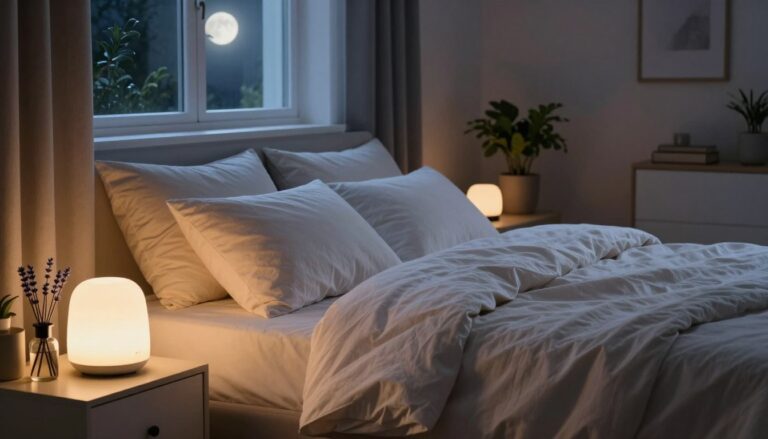

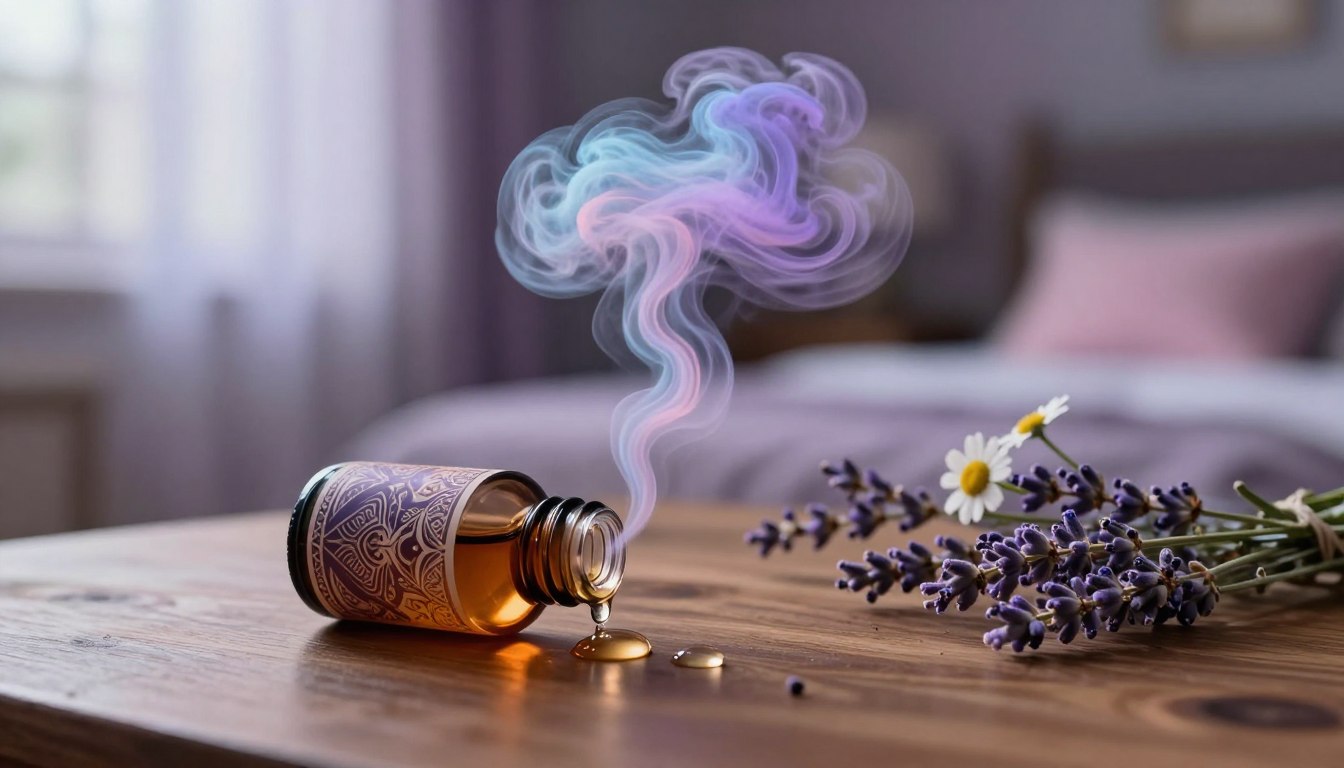
Can a few drops of the right blend cue your mind to wander deeper as you sleep?
You can shape your evening routine to favor vivid rest without medication. This introduction shows how a carefully formulated essential oil blend creates a calm, receptive atmosphere for sleep and dream work.
The common formula mixes Lavender, Roman Chamomile, Clary Sage, and Ylang Ylang. Use it in a diffuser (3–5 drops per 100 ml water), on diluted pillow sprays, or as a pre-diluted bath additive. These are sensory cues, not pharmacological agents.
Safety first: oils are concentrated. Never apply neat to skin; dilute with a carrier oil and consult a pediatrician before diffusing around children. Keep bottles out of reach.
Below, you’ll find precise dilution ratios, timing tips for small rooms versus open spaces, and quick steps to add this product into your evening ritual so your mind recognizes night mode in minutes.
Key Takeaways
- The dream essential oil formula blends classic botanicals to support a restful pre-sleep state.
- Use 3–5 drops per 100 ml water in a diffuser for controlled scent intensity.
- Apply only when diluted; never use undiluted on skin and keep products away from children.
- Options include diffusing, diluted linens, or a pre-diluted bath to match your evening routine.
- Lavender, Roman Chamomile, and Clary Sage work together to soothe the mind without heavy sedation.
- Guidance below outlines exact dilution, timing, and room-size adjustments for best results.
Unlock restful sleep with curated essential oil blends for vivid dreams
A targeted bedtime blend can cue your nervous system to relax and prepare for vivid nighttime imagery.
Aroma profile: floral, herbal, warm serenity
The composition pairs soft floral top notes with light herbal middles and a warm, sweet base. Lavender gives a gentle floral lift, Roman Chamomile and Clary Sage add herbaceous depth, and Ylang Ylang or Sweet Orange rounds the blend with gentle sweetness.
Who it’s for: bedtime, bath, and home diffuser ritual
You can use this mix at your bedside in an oil diffuser at 3–5 drops per 100 ml water. In a small bedroom, start at three drops; in a larger living area, use five for steady projection.
“Consistent pairing of scent and ritual trains the brain to recognize night mode.”
| Use | Typical drops/100 ml | Perceived intensity |
|---|---|---|
| Small bedroom | 3 | Bright top notes, gentle settle |
| Large home area | 5 | Stronger projection, longer linger |
| Bath / humid space | 3–4 pre-diluted | Boosted warmth and roundness |
Tip: If you read before bed, keep intensity low to support focus. If you bathe first, expect stronger aroma; reduce drops to keep perceived balance.
Dream Aromatherapy
Set an intention: reduce stress, create a dream-forward atmosphere, or simply unwind, then select the right diffuser pattern and timing.
Match your intent to an application strategy. For bedtime relaxation, run your essential oil device for 20–30 minutes before lights out. Close doors and windows to stabilize concentration, then switch the unit off as you slip into bed.
If you want a low, consistent background scent that cues sleep imagery, keep intensity modest. Continuous low output in a single bedroom works better than strong bursts that demand attention.

Practical timing and intensity tips
- For quick calm after a busy day, diffuse briefly while you stretch or breathe; the blend supports a parasympathetic shift without distracting you.
- In small bedrooms, use intermittent cycles (one or two runs). In open home layouts, extend duration rather than adding more oil to avoid nose fatigue.
- For a spa-like sequence, apply the product in the bath first, then a light diffuse in a reading nook to create a continuous aromatic narrative.
“A consistent scent cue trains your mind to enter a restful frame.”
Remember: this approach enhances your environment and feelings of calm; it is atmospheric support, not medical treatment. Watch for retailer sale bundles if you plan to stock bottles for multiple rooms—placement and timing shape the experience more than extra drops.
What’s inside: functional essential oils and why they work together
Each botanical in the mix brings a targeted volatile profile that shapes how you feel at night.

Lavandula officinalis / Lavandula angustifolia (Lavender)
Role: anchors the blend with floral-herbal softness. Lavender supplies linalool and linalyl acetate, compounds known for a soothing scent that freshens air without overwhelming your body.
Salvia sclarea (Clary Sage)
Role: adds balsamic-herbal depth. Clary sage balances brighter notes and helps promote feelings of ease through overlapping linalyl acetate content.
Anthemis nobilis (Roman Chamomile)
Role: brings a light apple-herbal nuance. Roman chamomile is ideal for diffusion because it blends gently and keeps the accord airy.
Cananga odorata (Ylang Ylang) versus Citrus sinensis / Origanum majorana
Ylang ylang offers velvety sweetness and a lingering floral tail. Alternatively, Sweet Orange gives a citrus lift and Sweet Marjoram wraps the mix in warm herbal comfort. Choose based on whether you want a richer or brighter final note.
“The blend’s calm comes from synergy, not a single dominant oil.”
| Ingredient | Key constituents | Aromatic role |
|---|---|---|
| Lavender (Lavandula) | Linalool, linalyl acetate | Soothing floral-herbal anchor |
| Clary sage (Salvia sclarea) | Linalyl acetate, sclareol | Balancing, stress-supportive depth |
| Roman chamomile (Anthemis nobilis) | Isobutyl angelate, esters | Gentle, apple-like diffusion note |
| Ylang Ylang / Citrus / Marjoram | Benzyl acetate / Limonene / Terpenoids | Sweet floral or bright citrus or warm herbal finish |
Note: These ingredients form an intentional, concise essential oil blend. Perceived benefits come from scent synergy; this is aromatic support, not a medical treatment.
How to use your dream essential oil blend safely and effectively
Start with simple measurements and clear steps to make safe, repeatable use part of your evening ritual.
Diffuser guidance
Fill the reservoir to the 100 ml mark, add 3–5 drops of your dream essential oil, and run the device for 20–30 minutes before bed.
In very small rooms, begin with 3 drops to avoid over-scenting. If your oil diffuser has intermittent mode, choose low-output cycles to maintain a gentle cloud without nose fatigue.
Pillow and linens
Never apply undiluted oil to fabric. Mix 2–3 drops essential oil into 1 Tbsp carrier oil, then dab onto a tissue or a pillowcase corner away from your face.
Alternatively, use a fine-mist spray that combines the essential oil blend with a solubilizer for even distribution.
Bath ritual and bathwater use
For bath use, pre-dilute 5–15 drops in 1 oz carrier oil (jojoba, fractionated coconut, sweet almond, or grapeseed) or emulsify the drops in 1 tsp mild liquid soap.
Add the diluted mix under warm running water and swirl. Aim for a 15–30 minute soak; avoid very hot bathwater to reduce skin sensitivity and excessive volatility.
Topical dilution and patch testing
Do not apply essential oil directly to skin. For adults, use 2–3 drops essential oil per 1 Tbsp carrier oil.
Patch test the diluted blend on the inner wrist for 24 hours before broader use. Keep oils away from eyes, ears, and nose; if contact occurs, flush with carrier oil, not water.
“Control dose, timing, and carrier choice to keep the blend effective and comfortable.”
Safety, pediatric caution, and product longevity
Keep all products sealed and out of children’s reach. Consult a pediatrician before introducing a diffuser into a child’s room and run it only while supervised.
With routine evening use at 3–5 drops per session, a typical bottle lasts about 2–3 months, letting you plan refills without breaking your relaxation routine.
| Application | Dilution | Typical time |
|---|---|---|
| Diffuser / bedside | 3–5 drops per 100 ml water | 20–30 minutes pre-bed |
| Pillow / linens | 2–3 drops per 1 Tbsp carrier oil | Light dab; avoid direct face contact |
| Bath | 5–15 drops per 1 oz carrier oil (or emulsify in soap) | 15–30 minute soak in warm water |
| Topical (adult) | 2–3 drops per 1 Tbsp carrier oil | 24-hour patch test before wider use |
Conclusion
A simple math for dilution and duration gives you a safe, repeatable route to a bedtime scent routine.
Use 3–5 drops per 100 ml water in a diffuser for 20–30 minutes, or pre-dilute 5–15 drops in 1 oz carrier for a bath. For pillow use, mix 2–3 drops per tablespoon of carrier to protect skin and fabric.
The hero botanicals—lavender, clary sage (salvia sclarea), and roman chamomile (anthemis nobilis)—form a supportive oil blend that helps promote feelings of calm without acting on the body like a drug.
Keep routine consistent: the same 20–30 minute evening window helps your mind link the aroma with winding down. Store products cool and dark, hunt sale bundles for multiple stations, and remember this is environmental support, not medical care.
Ready to try it? Add the dream essential oil to your cart, set tonight’s session, and start a small, measured ritual to ease stress and improve bedtime comfort.
Disclaimer: These statements are not evaluated by the FDA and are not intended to diagnose, treat, cure, or prevent any disease.